


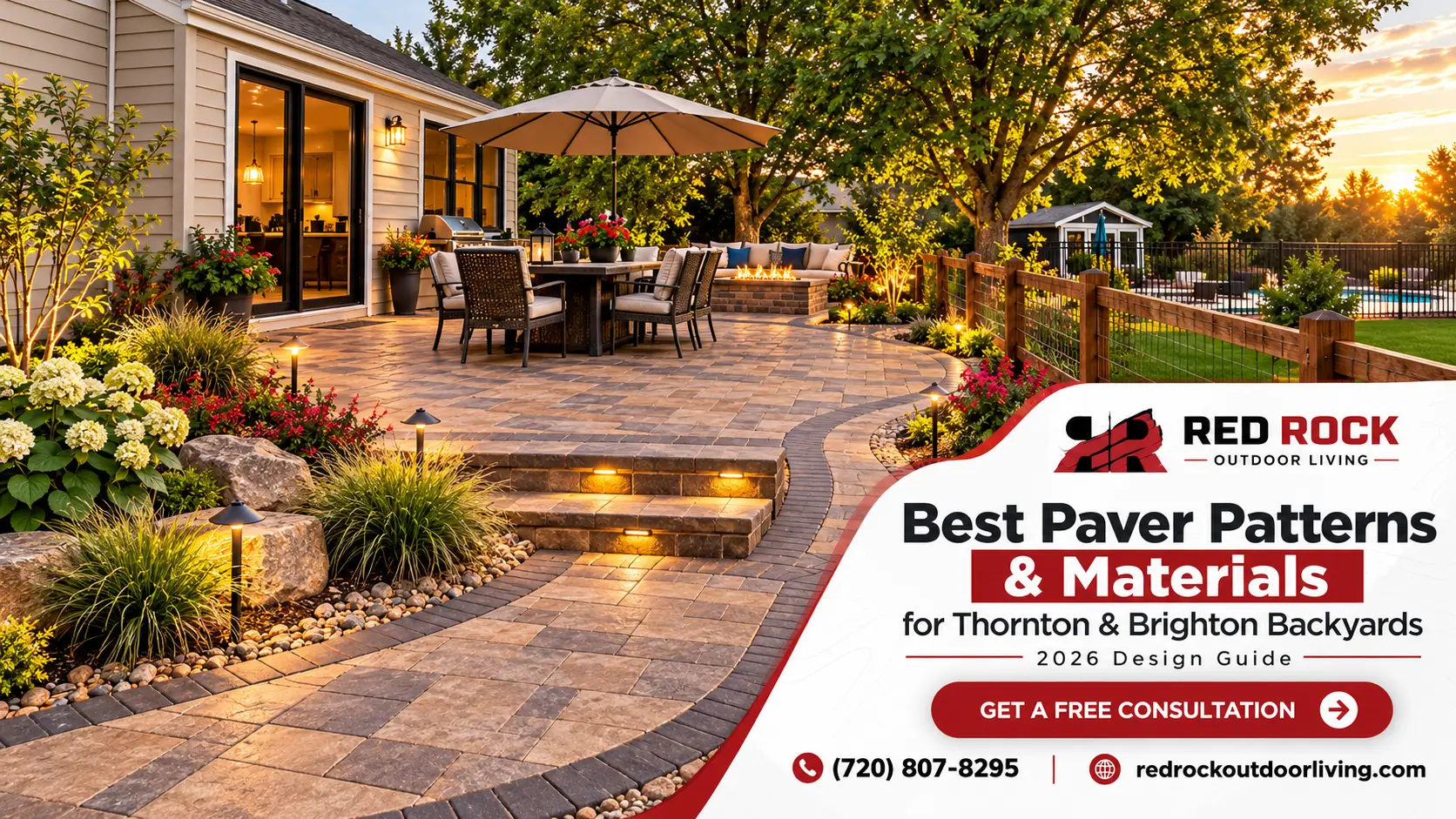
A great paver patio starts long before the first paver is placed. Material selection, pattern, base preparation, drainage, edge restraint, and the way the patio connects with the rest of the backyard all influence the finished result.
For homeowners researching paver patio materials in Thornton CO, the best choice is not always the most expensive product or the newest pattern. The right combination should fit the architecture of the home, the way the space will be used, Colorado weather conditions, and the overall backyard design.
In 2026, homeowners in Thornton, Brighton, and surrounding Denver Metro communities have more choices than ever, from clean large-format pavers to traditional herringbone layouts and multi-size modular designs.
Red Rock Outdoor Living helps homeowners bring these pieces together through custom patio design and complete outdoor living construction.
What Are the Best Paver Patio Materials in Thornton CO?
Concrete pavers remain one of the most flexible options for patios because they are available in many sizes, finishes, textures, and colors.
They can complement modern new construction, traditional homes, pool areas, outdoor kitchens, and more natural landscape styles.
Concrete Pavers
Concrete pavers are a popular choice because homeowners can choose from a wide range of looks without being limited to a single shape.
Options may include:
- Large rectangular pavers
- Square pavers
- Brick-style units
- Multi-size modular systems
- Textured stone-look finishes
- Smooth contemporary finishes
- Contrasting border pavers
A professionally designed custom paver patio can combine different sizes or accents without making the space feel overly busy.
Natural Stone
Natural stone offers individual color and texture that can work beautifully in landscapes with a more organic appearance.
Because stone varies naturally, homeowners should think about the overall color range rather than expecting every piece to look identical.
Porcelain and Specialty Pavers
Porcelain outdoor pavers can create a refined, modern appearance and are available in finishes that resemble stone or other materials.
The correct installation system matters, so product selection should be matched to the application and local site conditions.
What Materials Are Needed for a Paver Patio?
The visible pavers are only the top layer of the project.
When homeowners ask what materials are needed for a paver patio, it is important to understand that a successful installation is a complete system.
A typical project may require:
- Pavers
- Prepared subgrade
- Compacted aggregate base
- Bedding sand
- Edge restraints
- Joint sand
- Drainage components where needed
The exact specifications can change according to soil, patio use, drainage, paver type, and site conditions.
Why the Patio Paver Base Material Matters
Patio paver base material provides structural support beneath the finished surface.
A properly prepared aggregate base helps distribute loads and creates a stable platform for the bedding layer and pavers.
The base should not be treated as an area where installation shortcuts make sense.
Bedding Sand Is Not the Same as Base Material
Bedding sand forms a relatively thin, even setting layer directly beneath traditional interlocking concrete pavers. It should not be used to fill major low spots or compensate for an improperly prepared base.
The base, bedding layer, pavers, joint material, and edge restraints all work together.
That becomes particularly important in Colorado, where seasonal freezing and thawing make drainage and proper construction preparation valuable parts of long-term performance.
Best Paver Patterns for 2026 Backyards
The best paver patterns 2026 homeowners are considering include both established layouts and cleaner contemporary combinations.
A pattern should complement the scale of the patio rather than compete with everything around it.
Herringbone
Herringbone uses rectangular pavers arranged in an interlocking zigzag layout.
It has a strong visual character and works in traditional as well as contemporary settings.
Herringbone can be installed at different angles, allowing the pattern to direct the eye toward a doorway, outdoor kitchen, fire area, or another feature.
Running Bond
Running bond uses staggered rows, similar to traditional brickwork.
Its clean lines make it useful for:
- Patios
- Walkways
- Narrow spaces
- Transitional areas
- Curved pathways
Running bond can feel especially effective when the paver itself has interesting texture or color and the homeowner wants the layout to remain simple.
Modular Patterns
Modular paver patterns combine several coordinated paver sizes.
They can create visual movement without relying on one obvious repeating line.
For homeowners planning larger paver patio designs, modular layouts can help break up a broad surface and create a natural transition between dining and lounge zones.
Large-Format Linear Patterns
Large rectangles and squares continue to work well with newer home architecture.
Straight layouts, subtle offsets, and restrained color palettes can give new-construction backyards in Thornton and Brighton a cleaner appearance.
Which Paver Pattern Is Best for a Patio?
There is no one answer to which paver pattern is best because patio use is primarily pedestrian and allows considerable design flexibility.
Think about the home's architecture first.
For example:
- Modern home: large-format or linear pattern
- Traditional home: running bond or herringbone
- Rustic landscape: textured modular layout
- Large entertainment patio: multi-size modular design
- Small patio: simple pattern with limited color variation
The pattern should also relate to surrounding features.
If the backyard already includes an outdoor kitchen, pool, fire pit, walls, and detailed landscaping, a simpler paving pattern may provide visual balance.
Red Rock Outdoor Living can coordinate pavers through a complete landscape design so the material works with the entire yard.
What Is the Best Paver Pattern for a Driveway?
For driveways, performance becomes a greater factor because the pavers experience vehicle loads, braking, turning, and acceleration.
Herringbone Is a Strong Driveway Choice
Herringbone is widely used as a best paver pattern for driveway installations because its short, changing joint lines help create effective interlock.
Industry guidance recommends herringbone patterns for areas exposed to regular vehicular traffic because they provide strong resistance to horizontal movement.
However, pattern alone does not make a driveway durable.
The project also needs an appropriate paver product, properly designed base, drainage, compaction, joint material, and stable edge restraints.
A decorative pattern installed on an inadequate foundation is not a substitute for proper construction.
What Is the Best Paver Pattern for a Curved Walkway?
Curved walkways require a different design approach because a rigid geometric layout can create excessive cuts or awkward joints around bends.
Running bond is often a practical best paver pattern for curved walkway designs.
The staggered layout can follow gradual curves naturally, especially when narrower rectangular pavers are selected. Real-world paver designs also use running bond successfully through winding paths.
Keep the Curve Natural
Curved walkways usually look better when the curve has a clear purpose.
A pathway might bend around:
- A planting bed
- A tree
- A patio
- A lawn area
- A fire feature
- A retaining wall
Avoid adding unnecessary curves simply to make the project look more elaborate.
The goal should be comfortable movement through the yard.
Paver Patio Design in Brighton CO for New Homes
Paver patio design in Brighton CO deserves particular attention in newer neighborhoods where homeowners may begin with a largely unfinished backyard.
Starting from an open lot gives homeowners an opportunity to plan the patio as part of the complete yard rather than fitting it into landscaping that already exists.
Think Beyond the Patio Edge
Before finalizing the patio, decide where future features might go.
These could include:
- Pool or spa
- Outdoor kitchen
- Patio cover
- Fire pit
- Lawn
- Artificial turf
- Planting beds
- Retaining walls
If a custom outdoor kitchen is part of the long-term plan, utility routes and cooking space should be considered before the patio layout becomes permanent.
The same applies to pools. Planning a future pool and spa area early may help prevent unnecessary patio reconstruction later.
How to Make a Paver Patio Look Custom
Custom does not have to mean complicated.
Some of the strongest paver patio designs use a few carefully selected details.
Consider:
- A contrasting perimeter border
- One primary paver color
- Larger pavers for a modern look
- A different pattern around a fire feature
- Built-in seating
- Coordinated retaining walls
- Integrated lighting
- Planting beds around hard edges
A patio should look connected to the home and landscape instead of appearing like a separate rectangle placed in the yard.
Browse Red Rock Outdoor Living's completed outdoor living projects for examples of custom landscaping and hardscape throughout the Denver Metro area.
Choose the Pattern After Understanding the Whole Project
It is easy to begin patio planning by looking at paver catalogs, but material and pattern decisions should come after the basic backyard layout is understood.
A household that entertains frequently may need a large dining and lounge patio. A smaller family backyard might benefit from more lawn and a compact patio. Pool projects require different circulation and drainage considerations.
Red Rock Outdoor Living works with homeowners in Thornton, Brighton, and surrounding Denver Metro communities to coordinate paver patios with the rest of the outdoor environment.
For local business information and homeowner feedback, visit the Red Rock Outdoor Living Google Business Profile.
Ready to select materials and create a layout for your property? Request a paver patio consultation with Red Rock Outdoor Living.
Frequently Asked Questions
What Are the Best Paver Patio Materials in Thornton CO?
Concrete pavers are a versatile choice because they offer many sizes, colors, textures, and patterns. Natural stone and specialty outdoor pavers can also work well. The best material depends on the home, budget, application, site conditions, and desired appearance.
What Materials Are Needed for a Paver Patio?
A typical interlocking paver patio includes prepared subgrade, compacted aggregate base, bedding material, pavers, edge restraints, and joint sand. Drainage components may also be needed depending on the property.
Which Paver Pattern Is Best in 2026?
There is no universal best pattern. Herringbone provides a classic, structured appearance, running bond is clean and flexible, modular patterns create visual variety, and larger-format layouts work well with modern homes.
What Is the Best Paver Pattern for a Driveway?
Herringbone is one of the strongest choices for regular vehicular applications because the pattern helps maintain interlock and resist forces created by turning, braking, and accelerating vehicles.
What Is the Best Paver Pattern for a Curved Walkway?
Running bond is often an effective choice because rectangular pavers can follow gradual curves without making the walkway appear overly complicated. The paver size and radius of the curve will influence how many cuts are required.


