


Xeriscaping in Thornton, CO: Beautiful Landscaping That Actually Fits Colorado's Climate
Colorado's semi-arid climate, combined with water restrictions that tighten during dry years along the Front Range, has made many homeowners rethink the traditional water-hungry lawn and landscaping approach that works well in wetter climates but fights against conditions here. Xeriscaping offers a genuinely attractive alternative, using plant selection and design principles specifically suited to Colorado's actual water availability rather than working against it.
What Xeriscaping Actually Means
Xeriscaping isn't simply "landscaping with rocks and cactus," which is a common misconception. It's a design approach built around selecting plants adapted to lower water availability, grouping plants with similar water needs together, and using efficient irrigation and mulching techniques to minimize water waste, all while still creating a landscape that's genuinely lush, colorful, and visually appealing.
Plant Selection Suited to Front Range Conditions
Native and adapted plant species that thrive naturally in Colorado's climate require dramatically less supplemental water than traditional lawn grass or non-native ornamental plants. We select from a range of drought-tolerant perennials, ornamental grasses, and native shrubs that provide color and texture throughout the growing season while requiring only a fraction of the water traditional landscaping demands.
Reducing Turf Areas Strategically
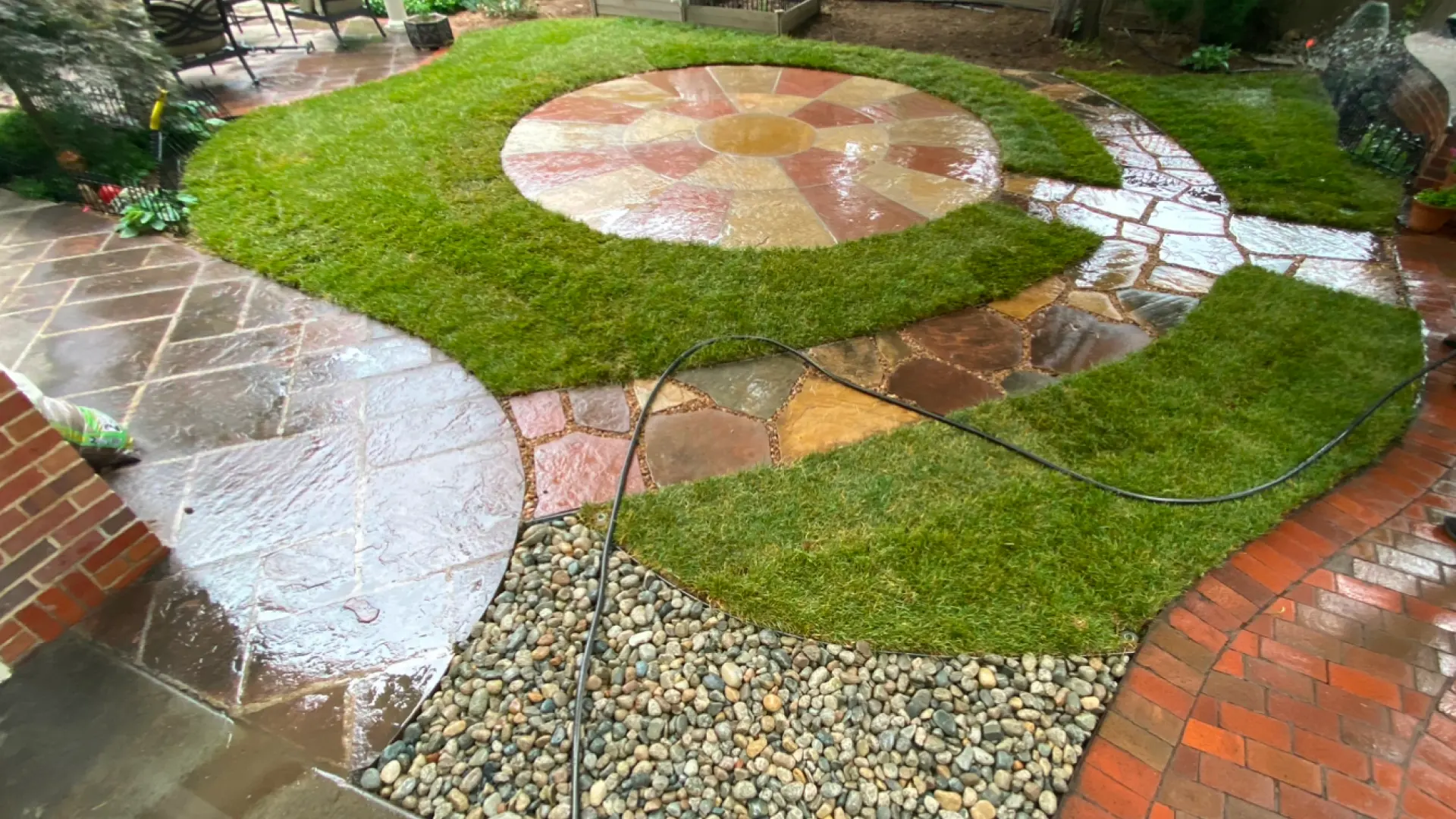
Xeriscaping doesn't necessarily mean eliminating grass entirely. We often work with homeowners to reduce turf to functional areas actually used for activities like play space or entertaining, while replacing purely decorative lawn areas with drought-tolerant plantings, hardscaping, or mulched beds that require significantly less water and maintenance overall.
Efficient Irrigation as Part of the System
Even drought-tolerant plants benefit from properly designed irrigation during establishment and periods of extreme dryness. We design drip irrigation systems specifically for xeriscape beds, delivering water directly to root zones rather than through broad spray patterns that waste water to evaporation and overspray, common with traditional sprinkler systems.
Mulching for Water Retention
Proper mulching plays a significant role in xeriscape design, helping retain soil moisture, regulate soil temperature, and reduce weed competition, all of which reduce the overall water demand of the landscape beyond what plant selection alone accomplishes.
Addressing the Misconception About Appearance
One of the biggest barriers to xeriscaping adoption is the assumption that it results in a sparse, rocky, unattractive landscape. Thoughtfully designed xeriscaping can be just as visually rich and colorful as traditional landscaping, using texture, seasonal bloom variation, and strategic hardscape elements to create genuine visual interest throughout the year.
Long-Term Cost and Water Savings
Beyond environmental considerations, xeriscaping typically reduces water bills significantly compared to maintaining a traditional lawn and landscape, and reduces the ongoing maintenance demands of mowing, fertilizing, and pest management associated with high-water turf areas.
Why Professional Design Matters
Successful xeriscaping requires understanding which plants genuinely thrive in Front Range conditions, how to group them effectively by water need, and how to integrate irrigation and hardscape elements into a cohesive design, rather than simply removing grass and hoping whatever's planted survives on its own.
The team at Red Rock Outdoor Living designs xeriscape landscapes across Thornton and Denver Metro that are genuinely beautiful, water-efficient, and built specifically for our regional climate.

Ready for a landscape that actually fits Colorado's climate? Reach out to Red Rock Outdoor Living today.


